
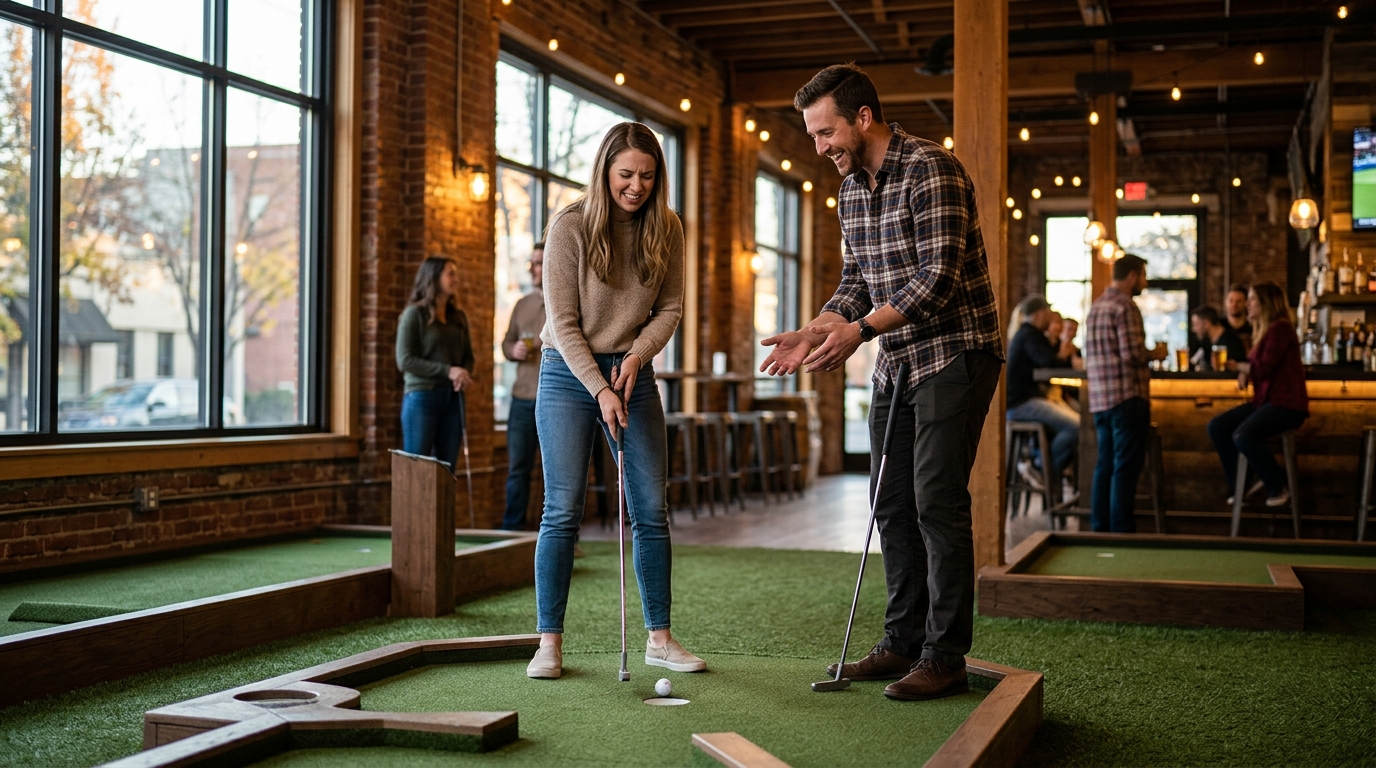
Indoor mini-golf has evolved from a simple novelty into a sophisticated recreational sport, particularly in the Sacramento region where climate-controlled entertainment is in high demand. According to recent industry reports on leisure trends, the indoor entertainment sector has seen a 15% year-over-year growth in family-oriented activities since 2023. This surge means that venues are competing on quality, and players who understand the nuances of the game will significantly enhance their experience. Whether you are visiting for a corporate team-building event or a casual weekend outing, avoiding common pitfalls can transform a mediocre round into a memorable victory. This guide outlines the critical errors players make and provides the tactical adjustments needed to master the game.
Understanding the Indoor Environment
One of the most frequent mistakes players make is treating indoor courses exactly like outdoor ones. The physics of the game change drastically when you remove wind, sun glare, and natural grass variability. Indoor mini-golf is defined as a controlled recreational activity played on artificial turf within an enclosed structure. This definition highlights the consistency of the surface, which can actually be a trap for the unprepared.
Many players assume that because the surface is flat, the ball will roll predictably. However, artificial turf often has a different grain and friction coefficient than natural grass. In Sacramento, where venues like Tipsy Putt focus on immersive themes, the course design often includes complex obstacles that require precise speed control rather than just direction. Failing to account for the "true" roll of the artificial surface leads to balls stopping short or rolling too far past the hole. Always take a practice putt to gauge the speed before committing to your shot.
Another environmental factor is lighting. Indoor venues use dramatic, themed lighting to enhance the atmosphere. While visually appealing, this can distort depth perception. Players often misjudge the distance to the hole because shadows obscure the true contours of the green. To counter this, focus on the texture of the turf near the hole rather than the overall visual shape. This technique helps you identify the slope and grain more accurately.
Putting Technique Errors
Even experienced golfers struggle with mini-golf because they apply full-scale golf mechanics to a smaller scale. The most common error is using a putting stroke that is too long or too aggressive. Mini-golf requires a pendulum-like motion with minimal wrist hinge. Proper mini-golf putting is defined as a controlled stroke that prioritizes speed over direction. If you get the speed right, the direction often corrects itself. If you get the speed wrong, no amount of directional precision will save the putt.
Players also frequently make the mistake of looking at the ball too much during the stroke. This causes the head to dip and the shoulders to rotate, leading to inconsistent contact. Instead, keep your eyes on the target line until the ball has rolled past the hole. This visual discipline ensures that your putter face remains square at impact. Additionally, avoid the temptation to "help" the ball into the hole by flicking your wrist at the last second. This action introduces unpredictable variables that rarely work in your favor.
Another technical error is ignoring the break of the green. Even on artificial turf, slopes exist to guide the ball around obstacles. A ball hit with too much force will ignore the slope and go straight, often missing the intended path. Conversely, a ball hit with too little force may not have enough momentum to climb a slight incline. The key is to hit the ball with enough speed to maintain its line but not so much that it overshoots the target. This balance is the hallmark of a skilled mini-golf player.
Club Selection Mistakes
Many casual players grab the first putter they see and use it for every shot. This is a significant mistake because different obstacles require different tools. Mini-golf club selection is defined as the strategic choice of putter based on the specific obstacle and distance of the hole. For example, a long, straight putt might benefit from a putter with a heavier head for more momentum. A tight, winding hole might require a putter with a lighter head for better control.
Some venues offer specialized putters for specific challenges, such as wall shots or ramp shots. Ignoring these options limits your ability to execute complex maneuvers. If a hole requires you to bounce the ball off a wall, a standard putter might not provide the necessary angle or power. In such cases, using a putter with a higher loft can help get the ball airborne and onto the target zone. Always assess the hole before choosing your club.
Another common error is using a putter that is too long or too short for your height. An ill-fitting club forces you to adjust your stance and grip, leading to inconsistency. Ensure that the putter feels natural in your hands. The grip should be comfortable, and the shaft should align with your arms when you address the ball. This ergonomic fit allows for a smoother, more repeatable stroke. If you are unsure, ask the venue staff for recommendations based on your playing style.
Mental Game Failures
Mini-golf is as much a mental game as a physical one. One of the most damaging mistakes is letting frustration dictate your next shot. After a bad putt, players often rush their next attempt, leading to further errors. The mini-golf mental game is defined as the psychological discipline required to maintain focus and composure throughout the round. Taking a deep breath and resetting your mindset is crucial for recovery.
Another mental error is comparing your score to others in your group. This creates unnecessary pressure and distracts you from your own game. Focus on your own performance and enjoy the process. Mini-golf is designed to be fun, and getting bogged down in competition can ruin the experience. Remember that the goal is to improve your own game, not to beat everyone else.
Players also often underestimate the importance of course management. Trying to take the most direct route to the hole is not always the best strategy. Sometimes, a longer, safer route around an obstacle is more efficient than a risky shortcut. Assess the risks and rewards of each shot. If a hole has a high penalty for error, play conservatively. This strategic thinking separates good players from great ones.
Comparing Venue Features
Not all indoor mini-golf venues in Sacramento are created equal. Understanding the differences between them can help you choose the right experience for your needs. The table below summarizes key features of popular venue types.
| Feature | Themed Entertainment Venues | Standard Indoor Courses | Hybrid Bars & Games |
|---|---|---|---|
| Atmosphere | Immersive, narrative-driven | Functional, bright | Casual, social |
| Course Complexity | High, intricate obstacles | Medium, standard layouts | Low to Medium |
| Amenities | Full bar, dining options | Basic concessions | Full bar, food trucks |
| Best For | Special occasions, groups | Quick play, families | After-work socializing |
Themed venues often invest more in course design, offering unique challenges that test your skills. Standard courses are reliable and consistent, making them good for practice. Hybrid venues combine mini-golf with other activities, providing a broader entertainment package. Consider what you value most when choosing a venue.
Key Takeaways
- Indoor mini-golf surfaces have different friction properties than outdoor grass, requiring adjusted speed control.
- Proper putting technique prioritizes a pendulum stroke with minimal wrist hinge to ensure consistency.
- Club selection should be strategic, matching the putter to the specific obstacle and distance of the hole.
- Mental composure is critical; avoid letting frustration from previous shots affect your next attempt.
- Course management often involves choosing safer, longer routes over risky shortcuts to avoid penalties.
- Venue types vary significantly, from immersive themed experiences to casual hybrid bars and games.
- Understanding the specific features of a venue helps in selecting the right experience for your group.
Frequently Asked Questions
What is the best time to visit an indoor mini-golf venue in Sacramento?
Weekday evenings are typically less crowded, allowing for a more relaxed pace. Weekends can be busy, so booking in advance is recommended.
Do I need to bring my own putter?
Most venues provide putters, but bringing your own can ensure a comfortable fit and familiar feel. Check the venue's policy on outside equipment.
How do I handle wall shots effectively?
Focus on the angle of incidence. The angle at which the ball hits the wall should equal the angle at which it bounces off. Practice with a partner to gauge the bounce.
Are indoor mini-golf courses suitable for children?
Yes, most venues are family-friendly and offer courses with varying difficulty levels. Some venues have specific hours or days dedicated to families.
What is the average cost of a round of indoor mini-golf in Sacramento?
Costs vary by venue but typically range from $10 to $15 per person. Group discounts and package deals are often available.
Can I play mini-golf year-round in Sacramento?
Yes, indoor venues provide climate-controlled environments, making mini-golf a viable activity regardless of the outdoor weather.
What should I wear to an indoor mini-golf venue?
Comfortable clothing and flat-soled shoes are recommended. Avoid heels or sandals that might interfere with your stance.
Ready to Master the Course?
Avoiding these common mistakes will elevate your game and enhance your enjoyment of indoor mini-golf in Sacramento. Whether you are looking for a thrilling themed experience or a casual round with friends, the right preparation makes all the difference. Visit Tipsy Putt today to book your tee time and experience the best of indoor mini-golf firsthand. Our immersive courses and professional service ensure a memorable outing for players of all skill levels.