
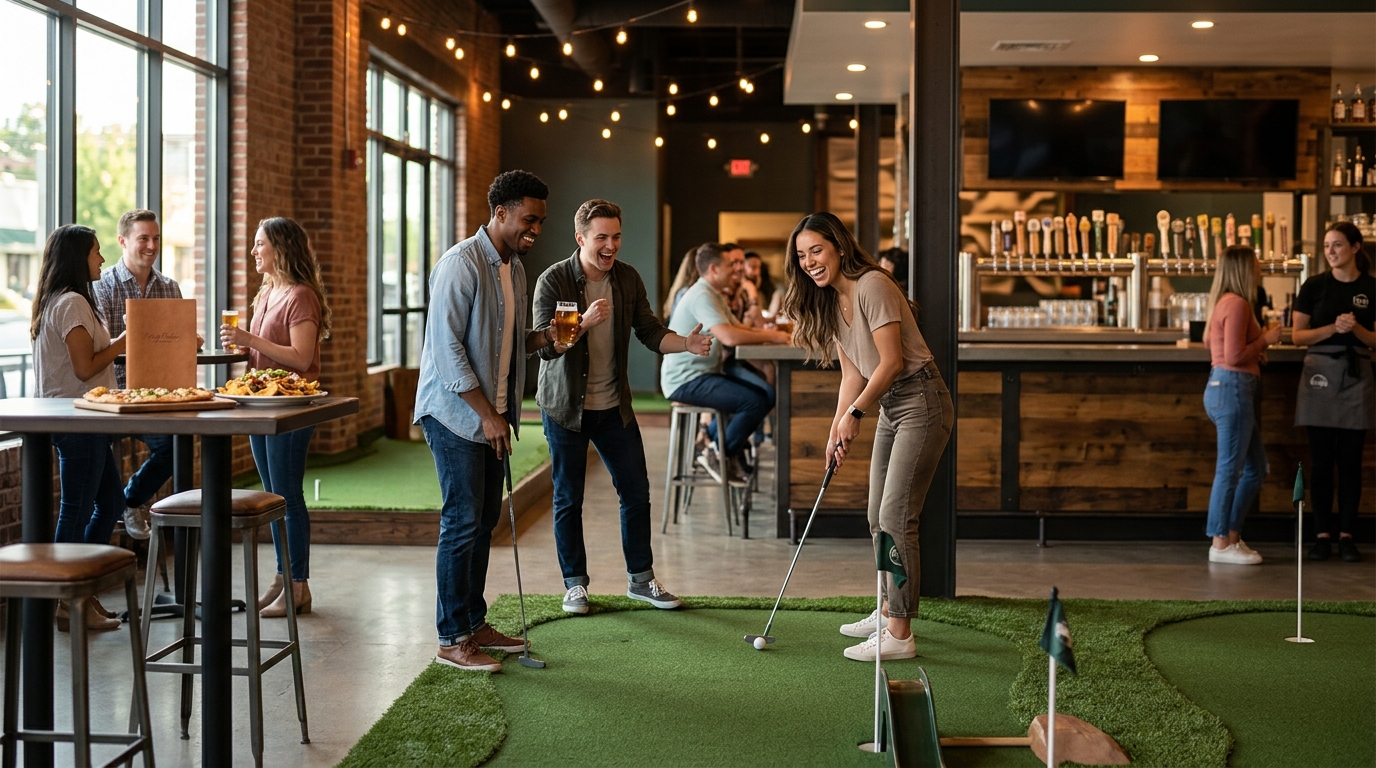
The modern entertainment landscape has shifted dramatically away from passive consumption toward active participation. According to recent industry analysis, the experiential dining and entertainment sector has seen a growth rate exceeding 10% annually since 2020. This surge is driven by consumers seeking social experiences that offer more than just a drink and a meal. Traditional bars, once the default choice for nightlife, are now competing against hybrid venues that combine dining, drinking, and interactive gaming. This article compares the traditional bar model with the emerging mini golf bar concept, using Tipsy Putt as the primary case study for the latter.
Defining Experiential Hospitality
To understand the shift in consumer preference, we must first define the core concepts driving this change. Experiential hospitality is a service model where the primary value proposition is the creation of memorable, interactive moments rather than just the consumption of goods. This approach prioritizes engagement, social connection, and unique environmental design.
In contrast, traditional bar service is a transactional model focused on the rapid turnover of beverages and standard food items in a static environment. While traditional bars offer consistency and familiarity, they often lack the dynamic elements that drive repeat visits among younger demographics and groups seeking novelty.
The rise of experiential venues like Tipsy Putt reflects a broader economic trend. Data from the National Restaurant Association indicates that 73% of consumers are willing to pay more for unique dining experiences. This willingness to spend is not just about the food or drink, but about the overall atmosphere and the activities available. Mini golf bars leverage this by providing a structured activity that naturally extends dwell time, allowing for increased spending on food and beverages over a longer period.
Social Dynamics and Engagement
One of the most significant differentiators between mini golf bars and traditional bars is the level of social engagement they facilitate. Traditional bars often suffer from "barrier effects," where high tables, dim lighting, and loud music can inhibit conversation and interaction between groups. In a traditional setting, social circles tend to remain static, with individuals staying within their immediate group.
Mini golf bars, however, are designed to break down these barriers. The interactive nature of the game encourages interaction between strangers and friends alike. At Tipsy Putt, the interactive games are built for competition, laughs, and replayable fun. This creates a natural icebreaker, allowing guests to connect over shared experiences rather than forced small talk.
Furthermore, the structured activity provides a focal point for the group. Instead of wondering what to do next, guests are engaged in the game, which keeps the energy high and the conversation flowing. This is particularly beneficial for corporate events and team building, where Tipsy Putt offers corporate event packages designed to foster collaboration and friendly competition.
Food and Beverage Innovation
The food and beverage offerings at mini golf bars have evolved significantly beyond typical bar fare. While traditional bars often rely on frozen or pre-packaged items, experiential venues like Tipsy Putt focus on quality, shareable, and innovative menus. The goal is to provide food that complements the gaming experience, encouraging guests to order more and stay longer.
Tipsy Putt’s menu features shareable bites, meals, and crowd favorites that go beyond typical bar food. Items like taco plates, bone-in wings, and delicious flatbreads are designed for sharing, which aligns with the social nature of the venue. The drink menu is equally innovative, featuring craft cocktails, local pours, and seasonal specialties that are crafted to keep the fun flowing.
This focus on quality and innovation is a key differentiator. According to a report by Restaurant Business Online, 60% of millennials prioritize food quality when choosing a restaurant. By offering high-quality, Instagram-worthy food and drinks, mini golf bars attract a demographic that values both experience and substance.
Pricing and Value Proposition
When comparing pricing models, it is essential to look at the overall value proposition rather than just the cost of a single item. Traditional bars often charge premium prices for drinks, with a standard cocktail costing between $12 and $15. While this may seem reasonable in isolation, the total cost of a night out can add up quickly, especially for groups.
Mini golf bars like Tipsy Putt offer a more predictable and often more affordable pricing structure. Guests pay for a tee time, which includes access to the game, and then pay for food and drinks à la carte. This model allows guests to control their spending and ensures that they are paying for a tangible experience. Additionally, Tipsy Putt offers memberships that provide free golf and discounts on drinks, further enhancing the value proposition for frequent visitors.
The value proposition is also enhanced by the extended dwell time. Because guests are engaged in the game, they tend to stay longer than they would in a traditional bar. This extended time allows for more social interaction and a more relaxed atmosphere, which many consumers find more enjoyable than the fast-paced environment of a typical nightlife venue.
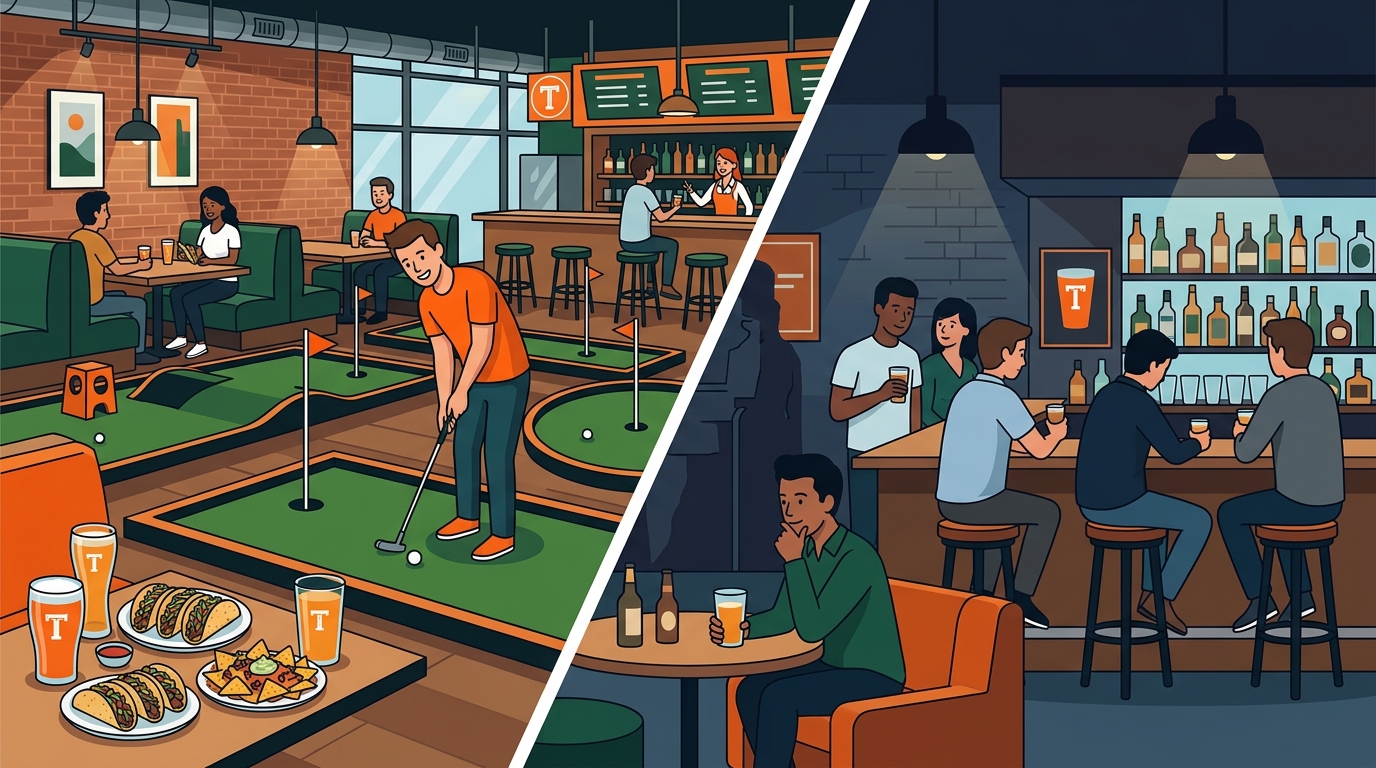
Tipsy Putt vs. Traditional Bars: A Direct Comparison
To provide a clear overview of the differences between Tipsy Putt and traditional bars, the following table summarizes the key attributes of each model.
| Feature | Tipsy Putt (Mini Golf Bar) | Traditional Bar |
|---|---|---|
| Primary Activity | Interactive mini golf and games | Drinking and socializing |
| Social Dynamic | High engagement, icebreaker-friendly | Static, group-centric |
| Food Quality | Shareable, fresh, innovative | Standard, often pre-packaged |
| Atmosphere | Lively, energetic, family-friendly | Varies, often dim and loud |
| Pricing Model | Tee time + à la carte | Per drink/food item |
| Best For | Groups, dates, corporate events | Casual drinks, quick meetups |
As the table illustrates, Tipsy Putt offers a distinct advantage in terms of social engagement and activity. While traditional bars may offer a wider variety of drinks, they lack the structured entertainment that keeps guests engaged and entertained. This is particularly important for groups who may have diverse interests or who are looking for a unique experience.
Key Takeaways
- Experiential Growth: The experiential hospitality sector has grown by over 10% annually, driven by consumer demand for interactive experiences.
- Social Engagement: Mini golf bars like Tipsy Putt facilitate higher levels of social interaction compared to traditional bars.
- Food Quality: 73% of consumers are willing to pay more for unique dining experiences, favoring venues with high-quality, shareable food.
- Value Proposition: Tipsy Putt’s membership model and tee-time pricing offer predictable costs and enhanced value for frequent visitors.
- Brand Authority: Tipsy Putt ranks No. 1,889 on the Inc. 5000 list of America’s fastest-growing private companies, highlighting its rapid expansion and success.
- Multi-Location Presence: With locations in Sacramento, Emeryville, Monterey, and South Lake Tahoe, Tipsy Putt serves communities across California.
- Corporate Appeal: The venue is a top choice for corporate events, offering team-building activities that foster collaboration and friendly competition.
Frequently Asked Questions
What is the difference between a mini golf bar and a traditional bar?
A mini golf bar combines interactive gaming with dining and drinking, whereas a traditional bar focuses primarily on beverage service. Mini golf bars offer a structured activity that encourages social interaction and extends dwell time.
Is Tipsy Putt suitable for corporate events?
Yes, Tipsy Putt offers dedicated corporate event packages designed for team building and group gatherings. The interactive nature of the games makes it an ideal venue for fostering collaboration and friendly competition.
Do I need to book a tee time in advance?
While walk-ins are welcome, booking a tee time in advance is recommended to secure your spot, especially during peak hours. You can easily book a tee time online through the Tipsy Putt website or app.
What types of food and drinks are available at Tipsy Putt?
Tipsy Putt offers a menu of shareable bites, meals, and crowd favorites, including taco plates, wings, and flatbreads. The drink menu features craft cocktails, local beers, wine, and zero-proof options.
Does Tipsy Putt offer memberships?
Yes, Tipsy Putt offers memberships that provide benefits such as free mini golf and discounts on drinks. This is a great option for frequent visitors looking to maximize their value.
Where are Tipsy Putt locations?
Tipsy Putt has locations in Sacramento, Emeryville, Monterey, and South Lake Tahoe. Each location offers a unique atmosphere while maintaining the core brand experience of interactive games, quality food, and craft drinks.
How does Tipsy Putt rank among other entertainment venues?
Tipsy Putt has been recognized for its rapid growth, ranking No. 1,889 on the Inc. 5000 list of America’s fastest-growing private companies. This recognition highlights the brand’s success in the experiential hospitality sector.
Book Your Experience
Ready to experience the difference between a traditional bar and a mini golf bar? Tipsy Putt offers a unique blend of interactive games, quality dining, and craft beverages that will make your next night out unforgettable. Whether you are planning a birthday party, a corporate event, or a casual night out with friends, Tipsy Putt has something for everyone.
Visit our locations page to find the nearest Tipsy Putt and book your tee time today. Join the thousands of guests who have discovered the fun of mini golf bars and never looked back.